



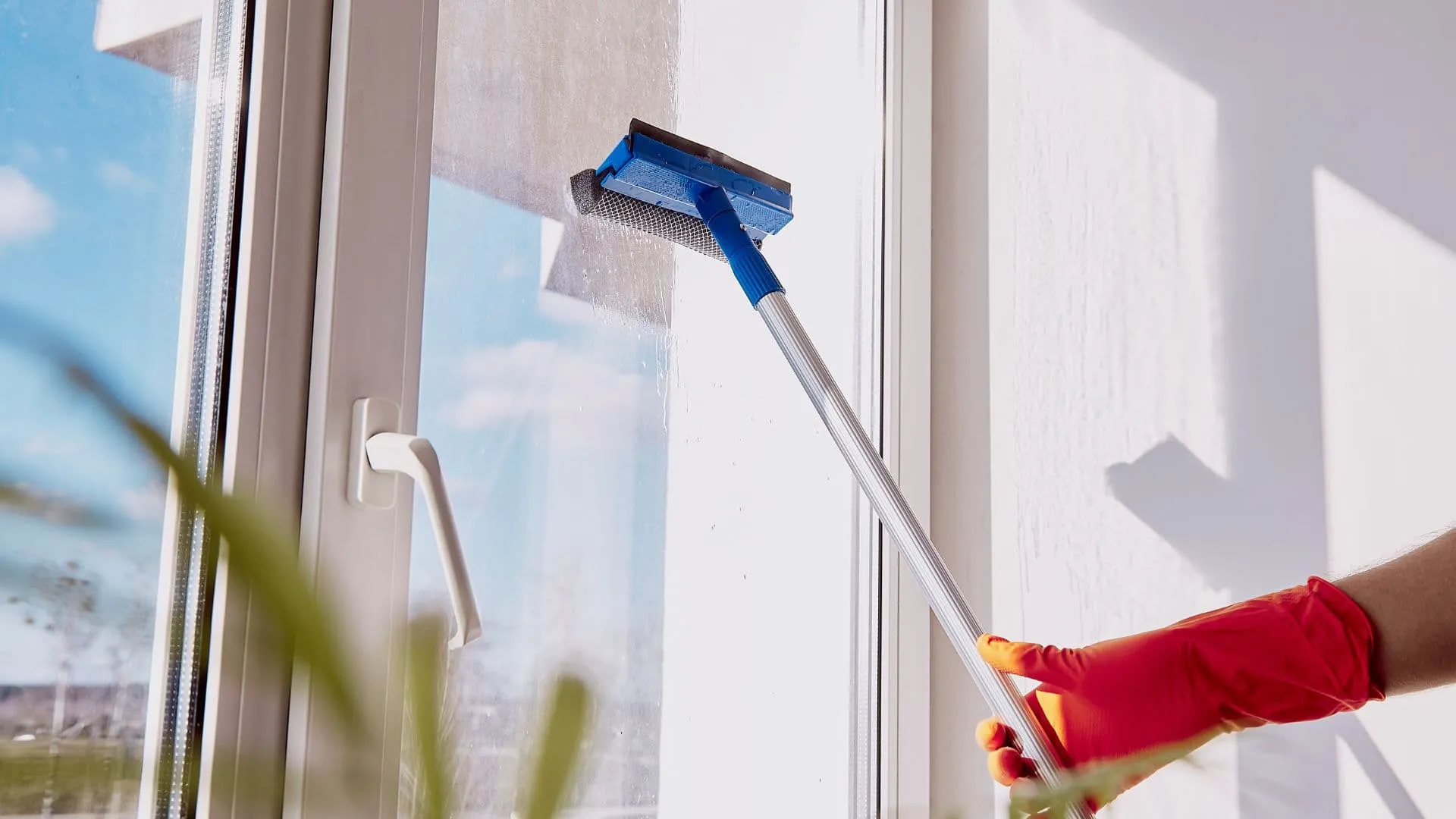
The number one reason windows come out streaky after cleaning? Paper towels. They seem convenient, but they leave behind lint and fibers that catch light and create streaks. For the “best window cleaning“ results, switch to a high-quality microfiber cloth or a rubber squeegee. Professional-grade results in 2026 are best achieved using a “two-cloth” method: one damp cloth with a drop of dish soap to scrub, and one dry waffle-weave microfiber to polish.
Window cleaning is not complicated – but getting it truly streak-free requires the right tools, the right solution, and the right technique. Here is the professional approach broken down for a home setting.
The Tools That Actually Make a Difference
| Tool | Why It Works | Best For |
| Microfibre cloth | Lint-free; picks up grime without scratching | Interior windows, small panes |
| Rubber squeegee | Pulls solution cleanly off glass | Large windows, exterior glass |
| Spray bottle | Controls how much solution you apply | All window types |
| Dish wand with sponge | Reaches corners and applies evenly | Exterior, ground-level windows |
| Extension pole | Safely reaches high windows | Second-storey or tall windows |
The Best DIY Window Cleaning Solution
Professional window cleaners often use a simple mix that costs almost nothing:
- 2 cups of warm water
- 1/4 cup of white vinegar
- 1/2 teaspoon of dish soap (no more – too many suds cause streaks)
Mix in a spray bottle and shake gently. This cuts through grime, dries without residue, and leaves glass genuinely clear. For heavily soiled windows, add a small splash of rubbing alcohol.
How to Clean Windows Without Streaks: Step by Step
1. Pick an overcast day. Cleaning in direct sunlight causes the solution to dry too fast, leaving streaks before you can wipe them.
2. Dust the frame and sill first with a dry cloth. Dirt from the frame will drip onto clean glass if you do not do this step.
3. Spray the cleaning solution onto the glass – enough to wet the surface but not so much it drips everywhere.
4. Use a microfibre cloth in an S-pattern (top to bottom) rather than circular motions. Circular wiping pushes dirt around rather than lifting it.
5. For large windows, use a squeegee instead. Start at the top left corner, pull horizontally across, and wipe the blade dry between each pass.
6. Dry the edges with a clean, dry microfibre cloth to catch any drips before they streak.
Interior vs. Exterior: Different Challenges
Interior glass tends to have fingerprints, dust, and indoor cooking grime. The DIY solution above handles this perfectly.
Exterior windows are a different story – they accumulate hard water spots, bird droppings, mildew, and oxidation from weather exposure. For these, a stronger approach works better: use a dash of CLR in your solution for mineral deposits, and a soft-bristled brush on the squeegee head to pre-scrub stubborn spots before wiping.
Best Commercial Window Cleaners Compared
| Product | Price | Best For | Streak-Free Rating |
| Windex Original | $ | General indoor use | Very Good |
| Sprayway Glass Cleaner | $ | Mirrors, streak-prone glass | Excellent |
| Invisible Glass | $$ | Car windows, precision work | Excellent |
| Method Glass Cleaner | $$ | Eco-conscious households | Good |
Seasonal Window Care Tips
- Spring: Clean interior and exterior after winter dust and condensation buildup.
- Summer: Clean exterior more frequently – pollen and bug residue accumulate fast.
- Autumn: Clear away leaf stains and mildew before wet weather sets in.
- Winter: Do not clean exterior windows when temperatures are below freezing – the solution can freeze on the glass.
Final Tip
The single best upgrade you can make to your window cleaning routine is replacing paper towels with microfibre cloths. Two good microfibre cloths – one damp for washing, one dry for buffing – will give you results that look genuinely professional for almost zero extra cost.