






A comfortable home does not happen by accident. Behind every steady room temperature is a system that runs thousands of hours a year, usually unnoticed until something goes wrong. A little knowledge about how that system works can save you money, prevent breakdowns, and keep the air in your home healthier.
Most homeowners only think about their furnace or air conditioner when it stops working in the middle of a heatwave or cold snap. That is the most expensive time to find a problem. Technicians at Aviator Heating & Cooling and other service teams often see the same pattern: small warning signs get ignored for months and turn into major repairs.
The good news is that most of these problems are easy to spot early. This guide covers how your system works, which warning signs matter, what a sensible maintenance routine looks like, and how to decide between repairing and replacing equipment.
How Your Heating and Cooling System Works
Your system moves heat rather than creating it from nothing. In summer, an air conditioner pulls heat and humidity out of your indoor air and releases it outside. In winter, a furnace or heat pump does the opposite, adding warmth to the air that circulates through your ducts.
Three parts work together in nearly every home:
- The thermostat tells the system when to start and stop.
- The main equipment, a furnace, heat pump, or air conditioner, heats or cools the air.
- The ductwork and filter carry air through the house and catch dust on the way.
If any one of these parts is neglected, the others work harder to compensate. That extra strain is what drives up energy bills and shortens equipment life.
Warning Signs You Should Not Ignore
Your system usually gives hints before it fails. Watch for these:
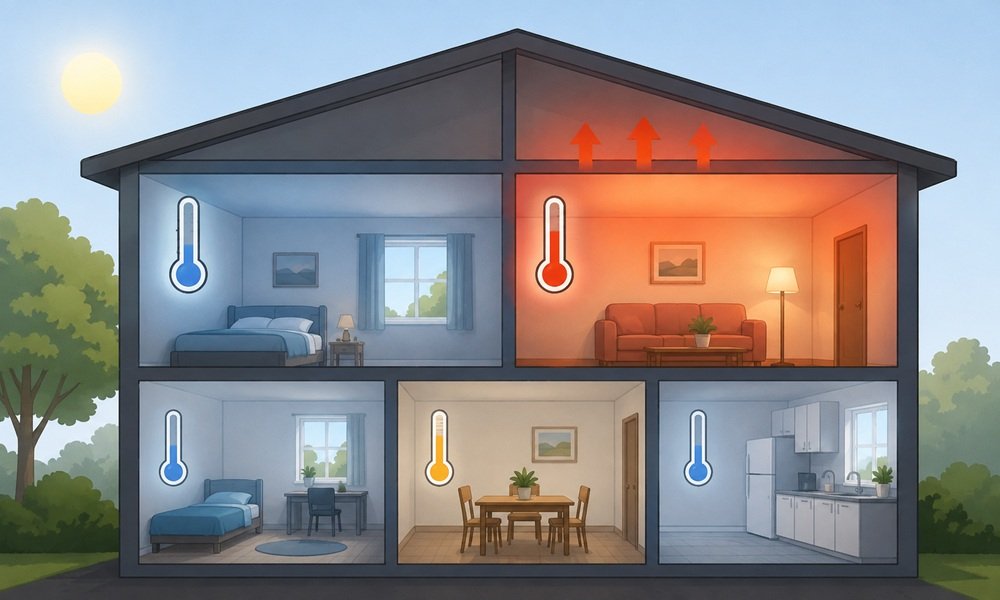
- Rooms that are noticeably hotter or colder than others
- Strange sounds such as grinding, rattling, or repeated clicking
- Unusual smells when the system starts up
- Higher energy bills with no change in how you use your home
- Short cycling, where the system turns on and off every few minutes
- Excess dust or humidity indoors
One of these signs may be minor. Several together usually mean it is time for a professional inspection.
A Simple Seasonal Maintenance Routine
Good maintenance does not have to be complicated. Follow these steps through the year:
- Check your filter every month. Replace it every one to three months, depending on the filter type and whether you have pets.
- Clear the area around outdoor units. Remove leaves, grass clippings, and debris, and keep plants trimmed back about two feet.
- Test your thermostat before each season. Make sure it responds correctly and holds the temperature you set.
- Open and check your vents. Furniture or rugs blocking vents can throw off airflow in a room.
- Schedule a professional tune-up once a year. Spring suits cooling equipment and fall suits heating equipment.
The U.S. Department of Energy explains that filters, coils, and fins need regular attention for an air conditioner to run efficiently throughout its life. It also notes that replacing a dirty, clogged filter can cut the unit’s energy use by 5 to 15 percent. That is a large saving for a task that takes a few minutes.
Your HVAC System and the Air You Breathe
Heating and cooling equipment does more than control temperature. It also affects the quality of the air you breathe every day. Dust, pet dander, pollen, and moisture all travel through your ducts, and a poorly maintained system can spread them around the house.
The U.S. Environmental Protection Agency states that indoor air quality problems usually come from pollutant sources and too little ventilation. Its introduction to indoor air quality explains that when little outdoor air gets in, pollutant levels can build up. Clean filters, sealed ducts, and proper airflow all help reduce that buildup.
If anyone in your household has allergies or asthma, these basics matter even more. Keep humidity moderate, run exhaust fans when cooking or showering, and do not let dust collect around vents and returns.
Repair or Replace? A Quick Comparison
Deciding what to do with an aging system is one of the hardest calls a homeowner faces. This table gives a rough guide.
| Factor | Repair Usually Makes Sense | Replacement Usually Makes Sense |
|---|---|---|
| System age | Under 10 years | 12 to 15 years or older |
| Repair cost | Small part or minor fix | Large, expensive component |
| Breakdown history | Rare problems | Frequent repairs each season |
| Energy bills | Stable | Rising year after year |
| Comfort | Even temperatures | Constant hot and cold spots |
A common rule of thumb is that if a repair costs close to half the price of new equipment, replacement deserves serious thought. Newer systems are also considerably more efficient than models from a decade or two ago, which can offset part of the upfront cost over time.
Common Questions Homeowners Ask
How often should a system be serviced?
Once a year is the standard recommendation. Homes with heavy use, pets, or older equipment may benefit from checks before both the heating and cooling seasons.
Does a higher thermostat setting save money in summer?
Yes. Raising the setting a few degrees when you are away or asleep reduces run time. A programmable or smart thermostat can handle this automatically.
Why does my system run constantly?
Common causes include a dirty filter, leaking ducts, poor insulation, or equipment that is the wrong size for your home. A professional inspection can pinpoint which one applies.
Is a bigger unit always better?
No. An oversized system cools or heats too quickly, shuts off early, and does a poor job of removing humidity. Correct sizing matters more than raw power.
Final Thoughts
Keeping your home comfortable comes down to steady habits rather than expensive upgrades. Change your filters, keep outdoor equipment clear, pay attention to unusual sounds or bills, and book a yearly inspection. These small steps protect your equipment, lower your energy costs, and improve the air your family breathes.
When a problem does appear, act early. A minor repair costs far less than an emergency breakdown, and a well-cared-for system will reward you with years of reliable comfort.