


After a heavy rain, you notice puddles forming beside your foundation, muddy patches in the yard, or water collecting near basement windows. Yet when you look up, your gutters appear completely normal.
This situation is more common than many homeowners realize. Gutters are only one part of a home’s rainwater management system. Even when they are clean and securely attached, problems elsewhere can prevent water from draining away properly.
Understanding where the drainage system fails can help you identify problems early, avoid unnecessary repairs, and protect your property from moisture-related damage.
Why Functional Gutters Don’t Always Mean Proper Drainage
Gutters collect rainwater as it runs off the roof, but collecting water is only the beginning of the process.
The water must also travel through downspouts and discharge somewhere that allows it to move safely away from the house.
If any part of this process fails, water may accumulate near the foundation despite the gutters appearing to work correctly.
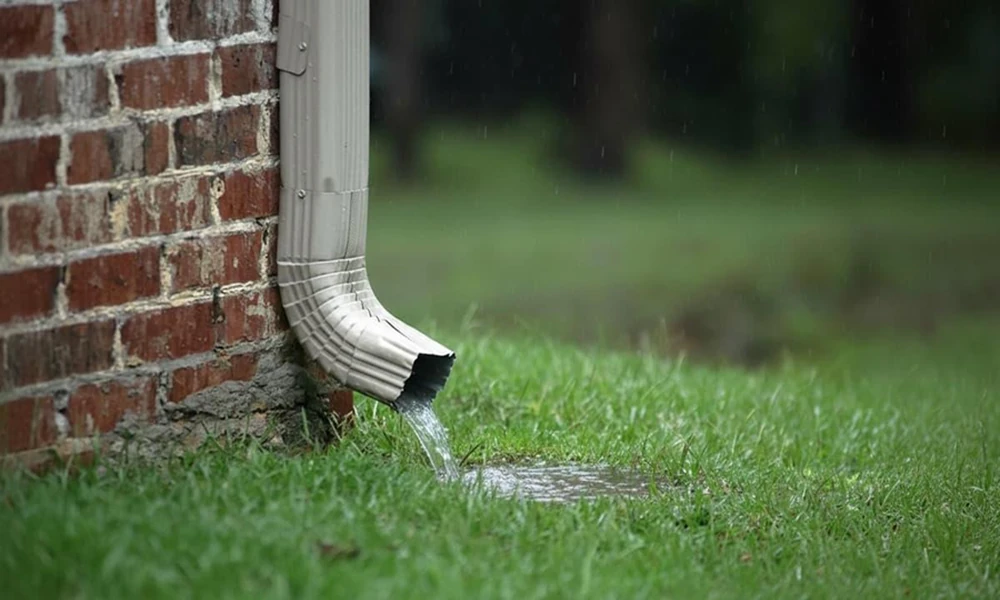
For example, a gutter may successfully collect rainwater while a poorly positioned downspout releases it directly beside the foundation. Similarly, a blocked underground drainage pipe can cause water to back up around the discharge point.
The important distinction is between collecting water and managing where that water ultimately goes.
Homeowners should evaluate the entire drainage path rather than assuming that clean gutters guarantee effective protection.
Common Reasons Water Collects Near Your Foundation
Several overlooked drainage problems can contribute to standing water around a home.
Downspouts Discharge Too Close to the House
A downspout that empties directly beside the foundation can concentrate roof runoff in one area.
Over time, repeated saturation may contribute to soil erosion, damp basement walls, or water entering through existing cracks.
Downspout extensions, splash blocks, or properly designed drainage systems can help direct water toward a suitable discharge location.
The Ground Slopes Toward the Foundation
Landscaping and soil conditions influence how rainwater moves across a property.
Ideally, the ground immediately surrounding a house should encourage surface water to move away from the structure.
However, settling soil, landscaping changes, and poorly positioned garden beds can create low spots where water accumulates.
Even an effective gutter system cannot fully compensate for grading that repeatedly directs runoff toward the building.
Underground Drainage Lines Are Blocked
Some homes connect downspouts to underground pipes that carry roof runoff away from the foundation.
Leaves, sediment, roots, or damaged pipe sections can interfere with these systems.
If water backs up around an underground connection during rainfall, the problem may be farther along the drainage line rather than inside the gutter.
Identifying the actual blockage before making repairs helps prevent unnecessary work.
When Damaged Downspouts Become Part of the Problem
Downspouts deserve particular attention because they connect roof drainage to ground-level water management.
Rust, cracks, loose joints, disconnected sections, and recurring blockages can prevent them from functioning properly.
A damaged downspout may leak against exterior walls or release large amounts of water where the ground cannot drain it effectively.
Homeowners should inspect downspouts for visible deterioration, especially around joints, elbows, and attachment points.
Small issues, such as a loose connection or removable obstruction, may be repairable. More extensive corrosion, recurring leaks, or physically damaged sections may justify downspout replacement to restore reliable water flow and improve drainage around the home.
The objective is not simply to install a new component. It is to ensure that rainwater travels through the system and reaches an appropriate discharge location.
Replacement downspouts should also be properly sized, securely attached, and compatible with the existing gutter system.
How to Identify Drainage Problems Before They Get Worse
A simple exterior inspection can reveal many potential drainage problems without requiring specialized equipment.
Start by examining the property from ground level after rainfall, once conditions are safe.
Look for:
- Puddles repeatedly forming near foundation walls.
- Soil erosion beneath downspout outlets.
- Mud splashing onto siding or exterior surfaces.
- Water overflowing near gutter-to-downspout connections.
- Detached, crushed, or visibly corroded downspout sections.
- Damp areas that remain wet noticeably longer than surrounding ground.
Pay attention to whether the same problems occur after multiple storms. Repeated patterns often provide better clues than an isolated puddle.
You should also examine where each downspout releases water.
An outlet may appear correctly installed but still discharge into a low-lying area or toward a walkway that channels water back toward the foundation.
If drainage problems persist despite clear gutters and downspouts, professional evaluation may be necessary to investigate grading, buried pipes, or other underlying causes.
Avoid climbing ladders or attempting to open underground drainage lines without the appropriate equipment and experience.
Practical Ways to Improve Rainwater Management
Once you identify the likely source of the problem, focus on improvements that address the actual drainage failure.
Keep Gutters and Downspouts Clear
Remove accumulated leaves and debris as needed, and inspect accessible outlets for obstructions.
Routine maintenance is especially valuable after storms or periods of heavy leaf fall.
Improve Water Discharge Locations
Where appropriate, use extensions or other drainage solutions to move roof runoff farther from the foundation.
Ensure the water does not create problems for neighboring properties, sidewalks, or other vulnerable areas.
Address Low Spots and Poor Grading
Correcting localized depressions or improperly sloped landscaping may help reduce standing water.
Significant grading work should account for surrounding structures, drainage routes, and local requirements.
Repair Deteriorated Components
Loose joints, damaged elbows, missing fasteners, and leaking sections should be addressed before they contribute to larger drainage problems.
The right solution depends on the condition of the system rather than its age alone.
Conclusion
Water pooling around a home does not automatically mean the gutters are failing.
The underlying problem may involve downspout placement, damaged connections, blocked drainage pipes, or landscaping that directs runoff toward the foundation.
By inspecting the complete path rainwater follows, homeowners can identify problems more accurately and choose repairs that address the source rather than just the symptoms.
Consistent maintenance, timely repairs, and thoughtful drainage improvements can help protect a home’s exterior and reduce the likelihood of avoidable moisture problems.