



Locker material selection tracks closely with humidity exposure because moisture is the single environmental factor most likely to shorten a locker’s service life. Powder-coated steel, solid plastic, and phenolic each respond differently to damp air, wet gear, and frequent cleaning, and matching the material to the room is one of the most consequential decisions in a locker specification.
Wet materials should be dried within 24 to 48 hours to prevent mold growth (U.S. Environmental Protection Agency).
Why does humidity matter so much for lockers?
Humidity matters for lockers because moisture accelerates corrosion on metal components, encourages mildew growth on stored contents, and degrades finishes over time. A locker that performs well in a dry office corridor can deteriorate quickly next to a pool deck or shower area.
3 categories of humidity exposure
Humidity exposure in facilities usually falls into 3 broad categories:
- Dry interior spaces such as offices, school corridors, and breakrooms
- Intermittently damp spaces such as athletic locker rooms and changing areas near showers
- Persistently wet spaces such as natatoriums, spa areas, and food processing facilities with regular washdowns
Moisture control and mold
Moisture control is the key to preventing mold growth indoors (U.S. Environmental Protection Agency). Locker selection is one part of that broader moisture strategy, alongside ventilation and building envelope design.
How moisture-resistant lockers are built
Moisture-resistant solid plastic lockers are built to resist rust, rot, and corrosion and are offered in configurations from 1 to 6 tiers along with a 2-person Z-style option (ASI Storage Solutions).
How does powder-coated steel perform in different environments?
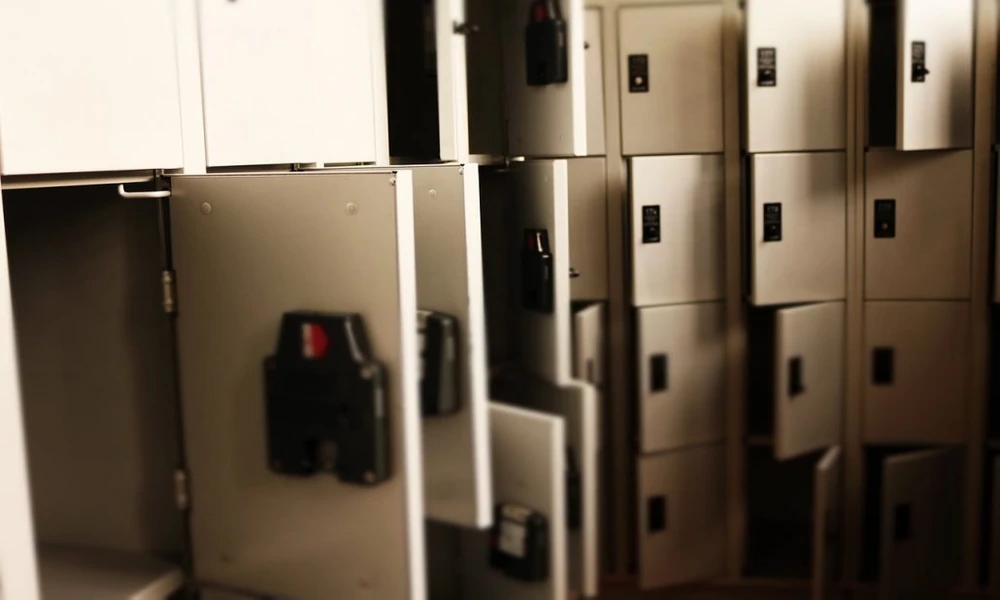
Powder-coated steel performs well in dry and moderately humid environments where lockers are not exposed to standing water or constant moisture. It is the most widely specified locker material because it offers strength, a broad range of sizes and configurations, and an economical price point.
Where steel lockers fit best
- School corridors and classrooms
- Office and employee breakroom areas
- Warehouses and distribution centers
- Public safety facilities with climate-controlled storage
- Athletic locker rooms with strong ventilation
The finish protects the steel beneath it. Scratches, dents, and chips that expose bare metal become points where corrosion can begin, so steel lockers in high-traffic or humid rooms benefit from regular inspection and prompt touch-up.
Why do solid plastic lockers suit wet areas?
Solid plastic lockers suit wet areas because high-density polyethylene does not rust, rot, or corrode, and it resists moisture absorption. The material is often chosen for natatoriums, water parks, and locker rooms directly adjacent to showers.
How HDPE simplifies cleaning
HDPE is also nonporous, which simplifies cleaning. Facility teams can wipe down plastic lockers with common cleaning solutions without concern for finish damage that would affect a painted surface. Color that runs through the material, rather than sitting on top as a coating, helps scuffs stay less visible over time.
Plastic locker configurations
Manufacturers offer plastic lockers in configurations similar to steel lines.
What makes phenolic lockers different?
Phenolic lockers differ from steel and plastic because they are made from dense layers of resin-impregnated kraft paper fused under heat and pressure, producing a rigid panel that resists moisture, impact, and corrosion. Phenolic combines durability with a more refined appearance.
Where phenolic is specified
Designers frequently specify phenolic for spaces where aesthetics matter as much as performance. Country clubs, health clubs, executive washrooms, and premium fitness centers use phenolic lockers to create a finished, furniture-like look while still standing up to damp conditions. Stainless steel fasteners and hardware are commonly paired with phenolic to avoid corrosion at connection points.
How should specifiers match material to room conditions?
Specifiers should match material to room conditions by evaluating 4 factors: moisture exposure, expected abuse, cleaning practices, and aesthetic goals. The answer to each question narrows the list of suitable materials.
Questions that guide material selection
- Will lockers be exposed to direct water, splash, or high humidity?
- How much physical abuse will doors and frames receive?
- What cleaning chemicals and methods will staff use?
- Does the space require a premium appearance?
- What is the expected service life of the installation?
A climate-controlled school corridor points toward steel, a pool deck points toward plastic, and a private club locker room may point toward phenolic. Mixed facilities often use more than one material, selecting each for its specific zone.
How do ventilation and airflow affect material performance?
Ventilation and airflow affect material performance because even moisture-resistant lockers hold damp contents that need to dry. Stale, humid air inside a closed locker creates conditions for odor and mildew on stored items regardless of the locker material.
Ventilation features that help
Ventilated doors, louvers, and perforated panels allow air exchange inside the compartment. Room-level ventilation matters just as much. A properly ventilated locker room supports both the lockers and the people using them, and it reduces the moisture load that every surface in the room must resist.
What maintenance practices extend locker life in humid spaces?
Maintenance practices that extend locker life in humid spaces include regular cleaning, prompt repair of damaged finishes, periodic hardware inspection, and keeping drainage around lockers clear. Small problems caught early rarely become replacement projects.
Routine maintenance checklist
- Wipe down exterior surfaces on a set schedule
- Inspect hinges, latches, and fasteners for corrosion
- Repair chips or scratches on painted steel promptly
- Keep floor drains near lockers unobstructed
- Encourage users not to store wet items for extended periods
Facilities that pair the right material with consistent maintenance get the most value from their locker investment. Material selection sets the ceiling for performance, and maintenance determines how close the installation comes to reaching it.
How do workplace change rooms factor into material choice?
Workplace change rooms factor into material choice because employees in manufacturing, food processing, and healthcare often change into work clothing that may be damp, soiled, or exposed to process conditions. Federal sanitation rules address change rooms and storage for street clothes and protective clothing in specific circumstances, and facility teams should review how they apply to their operations (Occupational Safety and Health Administration). Where washdown or humid conditions are part of daily work, moisture-resistant materials reduce long-term maintenance.
Why is material selection a long-term decision?
Material selection is a long-term decision because lockers are typically installed for decades, and replacing them involves demolition, downtime, and new installation costs. The upfront difference between materials often looks small compared with the cost of replacing lockers that failed early in the wrong environment. Evaluating humidity exposure honestly at the design stage protects the facility budget and delivers storage that performs as expected throughout its service life.