






Garage door maintenance helps keep one of the home’s largest moving components operating safely and predictably. Regular visual inspections, cleaning, checking safety features, and caring for seals can reveal wear before the door becomes noisy or unreliable. Because garage doors use heavy panels, springs, cables, and high-tension hardware, homeowner care must stay within the manufacturer’s instructions. Spring and cable repairs are not suitable DIY tasks for most people.
A typical system includes door panels, tracks, rollers, hinges, counterbalance springs, lift cables, weather seals, and an opener with safety controls. Designs vary, so maintenance requirements depend on door type, usage, climate, and the manufacturer’s manual. Visual checks are different from adjusting loaded components.
At a glance
| Area | Key point |
| Routine | Use a consistent, manufacturer-guided schedule |
| Safety | Do not improvise work on hazardous components |
| Observation | Record changes before symptoms worsen |
| Professional help | Escalate persistent or risky faults |
Start with a visual inspection
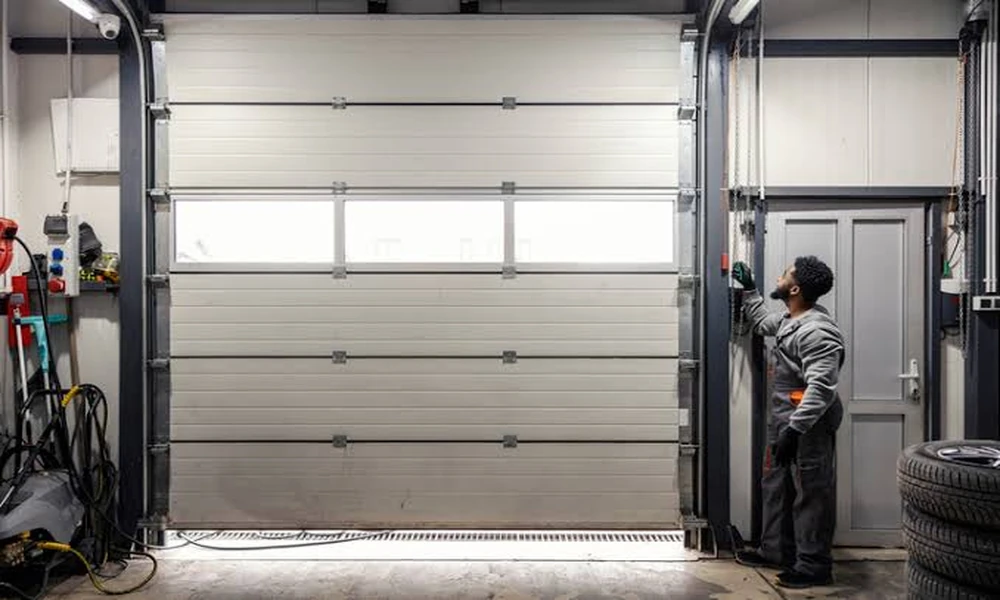
From a safe position, inspect panels, hinges, rollers, tracks, cables, and mounting brackets. Look for dents, frayed strands, rust, gaps, or parts that appear out of alignment. Do not touch a damaged cable or place fingers near hinges and pinch points.
Check the frame and the place where the door meets the floor. Daylight gaps, water staining, or cracked trim may indicate sealing or alignment trouble. A visual inspection cannot confirm that a spring or bracket is safe under load; treat obvious damage as a reason to stop using the door.
Clean tracks and door surfaces
Remove loose leaves, dust, and cobwebs with a soft brush or cloth while avoiding moving parts. Do not bend the track, use it as a step, or put tools into the roller path. Clean tracks make wear and obstructions easier to identify.
Use a cleaning product compatible with the door’s finish. Harsh solvents, abrasive pads, and high-pressure spray may damage paint, seals, or coatings. In coastal or winter road-salt environments, appropriate rinsing can help reduce corrosive deposits, provided water stays away from electrical components.
Lubricate only specified parts
Some systems require lubrication on hinges, bearings, rollers, or springs; others use parts that should not be treated the same way. Follow the manual and use the recommended product sparingly. Excess lubricant attracts grit and can make a clean mechanism dirty again.
Do not spray lubricant indiscriminately on tracks, belts, sensors, or opener electronics. Tracks are generally rolling surfaces, not lubricated bearings. If a door is noisy, first look for visible debris or damage, then follow the manual. Persistent grinding, scraping, or popping needs diagnosis rather than repeated spraying.
Treat springs and cables as high risk
A balanced door should not feel unusually heavy when operated using the method in the manual. An unbalanced door can strain the opener, move unevenly, or close unexpectedly. Some manuals describe a balance test, but only attempt it if the manufacturer permits it and the door can be handled safely.
Never loosen torsion springs, extension springs, lift cables, or bottom brackets to correct balance. These components store substantial energy and can cause severe injury. If the door drops, rises unexpectedly, feels heavy, or will not stay where the manual says it should, stop operating it and call a trained technician.
Test reversal and photo sensors
Most automatic openers include safety features intended to detect obstructions. Test the photoelectric sensors and reversal function using the exact procedure and frequency in the manual. Keep sensor lenses clean and confirm their alignment indicators match the manufacturer’s guidance.
Never use a person, pet, or body part as a test obstruction, and never bypass a safety device to force the door closed. If the system fails a prescribed test, stop relying on automatic operation and arrange repair. The manual specifies the correct test object and procedure.
Inspect weather seals and insulation
Check the bottom seal and perimeter weatherstripping for cracks, tears, flattening, or gaps. A seal may need replacement if it no longer contacts the floor evenly, but first make sure the door is aligned and the floor is reasonably even.
Do not add heavy insulation panels or accessories without confirming compatibility. Added weight can change the door balance and strain springs or the opener. If insulation is important for an attached garage, choose an approved kit or ask a qualified technician whether the counterbalance system can support it.
Look after the opener and remotes
Check the opener rail, mounting points, wall control, remote batteries, and visible drive components according to the manual. Keep ventilation openings clear and do not open the electrical housing unless qualified. If the opener hums without moving the door or stops unexpectedly, record the behaviour and any diagnostic light pattern.
Review remote access after moving house, losing a remote, or ending a contractor’s access. Follow the manufacturer’s process for deleting and reprogramming remotes or keypads. Keep the emergency release accessible to adults who understand its use, but prevent children from playing with controls.
Listen for changes in movement
New rattling, squealing, jerking, slow movement, or uneven travel can signal a loose fastener, worn roller, obstruction, opener issue, or counterbalance problem. Sound alone does not identify the cause, so do not assume every noise needs lubricant.
Observe a normal cycle from a safe distance. If the door binds, hangs at an angle, leaves its track, or makes a sudden loud bang, stop using it. A loud bang may indicate spring failure. Keep people away and arrange professional service rather than forcing the door open or closed.
Adjust care for seasonal conditions
In cold weather, a bottom seal may freeze to the ground. Repeatedly running the opener against a stuck door can damage the system. Follow the manual for safely freeing the seal and avoid tools that can tear rubber or dent the door.
In wet or coastal climates, look for corrosion and water entry. In dusty areas, clean more often. After storms, check for impact damage and debris before operation. Do not climb on the door or track to reach components; use suitable access or hire a professional.
Keep the door path clear
Keep bins, bikes, tools, and stored items outside the door’s travel path. Make sure the photo sensors are not obscured and that the floor area is clear before closing. Teach household members not to walk or drive beneath a moving door.
Use the emergency release only according to the manual. When the opener is disconnected, a heavy or unbalanced door may be difficult to control. Do not prop a door open with improvised supports or allow children to operate the system unsupervised.
Know when to call a technician
Arrange professional service for frayed cables, broken springs, bent tracks, a door that has come off its track, damaged bottom brackets, sudden imbalance, or failed safety features. If the door is stuck open, secure the area rather than attempting to hold it up with improvised props.
Ask the technician to identify the fault and provide an estimate separating labour, parts, and any additional work. A service visit may include balance, rollers, cables, spring condition, fasteners, opener force settings, and safety tests. Keep a record of repairs and replacement parts.
Build a regular schedule
Once a month, make a quick visual check for damage, debris, unusual sounds, and seal gaps. Test safety features on the manufacturer’s schedule and replace remote batteries as needed. Lubricate only the specified components at the recommended interval.
High-use doors may wear faster than doors opened only a few times a week. Arrange professional inspection as the manual recommends or when behaviour changes. A simple log of tests, cleaning, and repairs helps identify repeated problems and supports warranty discussions.
Practical checklist
- Inspect visible parts from a safe position.
- Keep the door path and sensors clear.
- Test safety features as the manual directs.
- Never adjust springs or lift cables yourself.
- Stop using a damaged or unbalanced door.
Troubleshooting without guesswork
If the door behaves differently, stop and note exactly what happened: whether it reversed, stopped halfway, moved unevenly, or made a new noise. Check only for obvious obstructions and clean sensor lenses as instructed. Do not repeatedly operate a door that binds or seems unsupported, because each cycle can increase damage or expose people to a falling door.
When contacting a technician, share the opener model, door type, error-light pattern, and any recent impact or power interruption. Ask whether the door should remain closed and unused until the visit. A clear description helps the technician prepare suitable parts and reduces the temptation to attempt unsafe adjustments while waiting.
Power outages and manual operation
A power outage can affect an opener’s clock, programmed remotes, or backup battery depending on the model. After power returns, check the manual for the correct reset procedure and test the door from a safe position. If the opener has a backup battery, follow its inspection and replacement guidance rather than assuming it will work indefinitely.
Manual release procedures differ by door and opener. A door should be disconnected from the opener only when the door is closed and the manufacturer’s instructions say it is safe. If a spring is broken or the door is unusually heavy, disconnecting the opener can make the door difficult to control. In that situation, keep the area clear and call a professional.
Keep the owner’s manual, service contact, and model information accessible. In an urgent situation, having those details ready can prevent improvised troubleshooting. Make sure adults who may need to use the door understand the safe procedure, while children are kept away from the release cord and moving hardware.
After a repair or adjustment
Once a technician has completed a repair, ask for a demonstration of normal operation and any safety tests that were performed. Confirm which parts were replaced, whether the opener settings changed, and whether any follow-up inspection is recommended. Keep the invoice and service notes with the manual. If the original symptom returns, report it promptly and refer to the earlier work instead of attempting another adjustment yourself.