





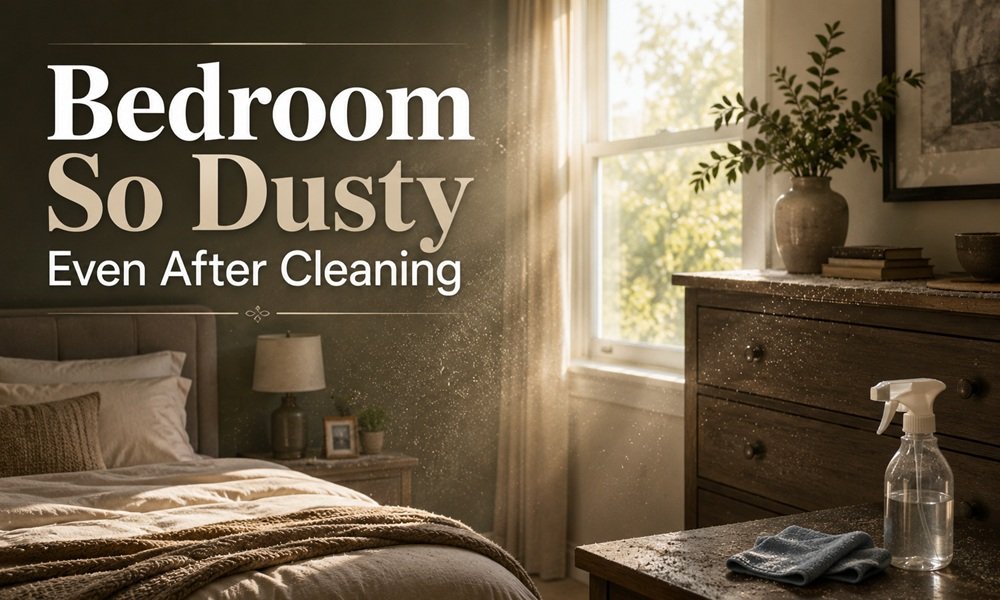

You dust the nightstand on Sunday. By Tuesday, there is a soft grey film again. It feels personal, like the room is mocking your effort.
It is not you. Bedrooms are simply the dustiest room in most homes, and there are real reasons why.
Let us clear up what dust actually is, why your bedroom collects more of it than other rooms, and the fixes that finally break the cycle.
Bedrooms get dusty fast because they are full of fabric and skin. Bedding, carpet, curtains, and upholstery constantly shed fibers, and you shed skin cells while you sleep. Add pet dander, outdoor particles, and a ceiling fan flinging it all around, and dust rebuilds within a day or two. The fixes that matter most are not surface dusting. They are washing bedding hot, upgrading your air filter, controlling humidity, and cleaning from the top down.
What is house dust actually made of?
Dust is not just “dirt.” It is a mix, and the mix explains everything.
- Dead skin cells (you shed a lot, and mostly in bed).
- Textile fibers from bedding, carpet, curtains, and clothes.
- Pet dander and hair.
- Pollen and outdoor grit tracked in on shoes and clothes.
- Fine soot and particles pulled in through windows and vents.
An average home collects roughly 40 pounds of dust a year. That volume is normal. What is not normal is dust that visibly rebuilds every day.
Particle size matters for your health, not just your dusting cloth. Particles between 2.5 and 10 microns can irritate the airways. Particles under 2.5 microns are small enough to reach deep into the lungs. This is why “just dusty” can also mean “harder to breathe.”
Why is the bedroom dustier than the rest of the house?
One question shows up on Quora again and again: why is my room so much dustier than every other room? The most common answer from people who have chased it down is the same. Textiles.
Bedrooms are textile factories. Think about the concentration in one small space:
- A bed, blankets, sheets, and a comforter.
- Pillows, throw pillows, and often stuffed toys.
- Curtains, a rug or carpet, an upholstered chair or headboard.
- A closet full of clothes shedding fibers every time the door opens.
Every one of those items sheds microscopic fibers around the clock. Then you sleep there for eight hours, shedding skin the whole time, which also feeds dust mites living in the mattress and pillows.
Add poor air movement in a closed room and the particles settle instead of leaving. That grey film is the result.
Where is the dust actually coming from? A source breakdown
| Dust source | How much it contributes | The real fix |
|---|---|---|
| Bedding and mattress | Very high | Wash weekly in hot water, use zippered dust-mite encasements |
| Carpet and rugs | High | Vacuum with a HEPA vacuum twice a week, consider hard flooring |
| Ceiling fan and vents | High, and it spreads everywhere | Wipe blades regularly, clean supply and return grilles |
| Clutter and open shelves | Medium | Fewer surfaces means fewer landing spots |
| Outdoor air and shoes | Medium | No-shoe policy, close windows on high-pollen days |
| Dirty HVAC filter | Medium to high | Change the filter on schedule with the right rating |
Why does dusting not seem to help?
Because most people dust wrong, in the wrong order, with the wrong tools.
They dust bottom to top. Dust falls. If you clean the dresser and then the shelf above it, you just re-dusted the dresser. Always work top to bottom, finishing with the floor.
They use a dry cloth or feather duster. That flicks dust into the air, where it floats and lands again. A slightly damp microfiber cloth traps dust instead of launching it.
They ignore the ceiling fan. Blades collect a thick coat, then throw it across the whole room the moment you switch the fan on. Clean the blades before you clean anything else.
They forget the air. Surface dust is only half the problem. The other half is airborne and needs filtering, not wiping.
The fixes you should do:
Most articles give you the same list: dust weekly, vacuum, wash bedding. All true. Here are the higher-leverage moves that actually change the dust level in the room.
1. Get the humidity into the 40 to 50 percent range. Very dry air keeps fine dust airborne longer and increases static that makes it cling to surfaces. Slightly humid air helps particles settle and stay down where you can vacuum them. Too humid, though, feeds dust mites and mold, so 40 to 50 percent is the sweet spot.
2. Encase the mattress and pillows. Your mattress and pillows are a hidden dust and dust-mite reservoir. Zippered, tightly woven encasements cut off a source that surface cleaning can never reach. This single step surprises people with how much it helps.
3. Match the air filter to the job. A cheap flat filter protects the furnace, not your air. A pleated filter with a higher rating (MERV 11 to 13) captures far more fine dust. Note one caution: very old or weak HVAC systems can struggle with high-rating filters, so check that airflow stays healthy.
4. Clean the return-air grille, not just the supply vents. The return grille pulls room air through it constantly and cakes with dust. A dirty return quietly recirculates particles. Almost nobody cleans it.
5. Add an air purifier with real capacity. A HEPA purifier sized for the room (check its clean-air delivery rate against your square footage) removes airborne particles before they land. Run it while you sleep, when skin-shedding peaks.
A simple anti-dust routine that sticks
Daily, 2 minutes:
- Make the bed. It traps mite debris under the covers instead of releasing it into the air.
- Kick shoes off at the door.
Weekly, 20 minutes:
- Wash sheets and pillowcases in hot water.
- Dust top to bottom with a damp microfiber cloth.
- Vacuum floor, under the bed, and along baseboards with a HEPA vacuum.
- Wipe the ceiling fan blades.
Monthly:
- Wash or replace the HVAC filter.
- Launder curtains or throws.
- Wipe the return-air grille and vent covers.
- Clean under and behind furniture.
Frequently asked questions
Is it normal for dust to come back in a day? A light film returning in a day or two is common in a bedroom because of all the fabric and skin cells. Heavy, fast rebuild usually points to a dirty filter, a dusty ceiling fan spreading it, or carpet that needs deeper cleaning.
Do air purifiers actually reduce dust? Yes, for the airborne portion. A properly sized HEPA purifier captures fine particles before they settle, which means less to wipe and cleaner air to breathe. It will not replace vacuuming for settled dust.
Should I get rid of my bedroom carpet to reduce dust? Carpet is one of the biggest dust reservoirs. Switching to hard flooring with a washable rug noticeably cuts dust. If you keep carpet, vacuum with HEPA at least twice a week.
Why is my room dustier than the rest of the house? Because it holds the most textiles and is where you shed the most skin while sleeping. More fabric plus more skin plus a closed door with low airflow equals more dust.
Does keeping windows open make dust worse? It can, especially on windy or high-pollen days, since outdoor particles drift in and settle fast. Ventilate when air quality is good, and keep windows closed when pollen or dust counts are high.