





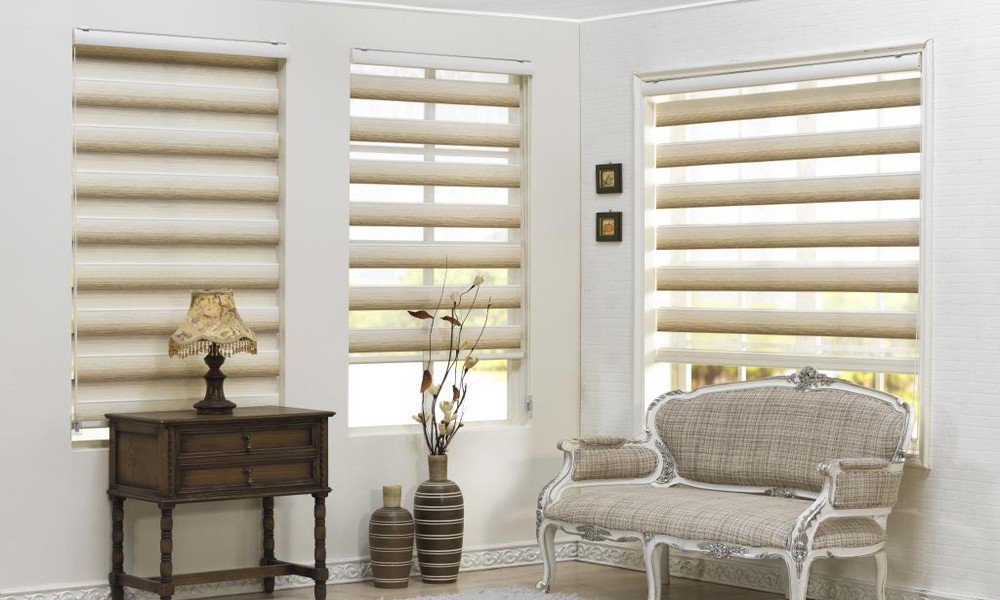
Combi blinds Singapore homeowners choose offer something that most single-function window coverings cannot: the ability to shift seamlessly between sheer and opaque, giving complete control over light and privacy from the same installation.
How Combi Blinds Work
The combi blind operates on a principle of alternating fabric bands: sheer zones and solid zones move past each other on a roller mechanism. When the sheer bands align with the window opening, light passes through softly, maintaining visibility. When the solid bands align, the blind becomes opaque, blocking both light and the view from outside. A continuous adjustment loop allows the position to be set anywhere between fully transparent and completely closed.
This flexibility is what sets the combi blind apart from conventional roller blinds, which offer only the choice between up or down. The ability to land anywhere in between – filtering afternoon light without darkening the room entirely, for instance – suits the variable light conditions of Singapore’s tropical day, where direct sun can be harsh in the morning and diffuse in the afternoon.
Why Singapore Homes Are Well-Suited to Combi Blinds
Singapore’s housing context makes combi blinds a practical choice for several reasons. In high-density residential areas – HDB flats, condominium towers, and terrace houses – the proximity to neighbouring properties means that privacy control is a genuine daily concern, not simply an occasional need. A window covering that allows natural light to enter while maintaining visual privacy from neighbours is directly useful in this environment.
The city’s year-round sunlight also creates a need for adjustable light management that a purely decorative curtain cannot always meet. Combi blinds Singapore installations are frequently paired with a secondary curtain or pelmet for complete blackout when needed, creating a layered window system that handles every lighting condition from bright midday sun to complete darkness for sleep.
Design Versatility Across Interior Styles
One of the more underappreciated qualities of the combi blind is its design range. The format is available in:
- Solid neutral tones that recede into the room and keep visual attention on the furniture and finishes
- Textured weaves that add visual interest while maintaining the functional alternating band structure
- Patterned options, including subtle geometric and botanical motifs, for rooms where the blind itself serves as a decorative element
- Blackout variants where the solid band provides complete light blocking rather than simply reducing transmission
This range allows combi blinds to work in living rooms, bedrooms, home offices, and dining areas without requiring a different product category for each application.
Installation and Practical Considerations
Combi blinds can be installed inside the window recess for a clean, recessed appearance that suits windows with adequate depth, or face-mounted above and outside the recess for a frame-covering installation that suits windows of any depth. Face mounting is the more common approach in Singapore’s HDB and condominium stock, where window recesses are often too shallow for a recessed fit.
“The right placement of things makes all the difference to how a space feels and functions.” – Lee Kuan Yew.
The installation position and bracket choice affect not only appearance but also how well the blind controls light at the edges. A face-mounted blind with adequate overlap on all sides provides better light blocking than a closely fitted inside-mount option.
Motorisation for Modern Homes
Smart home integration has moved from a novelty to a standard feature in Singapore’s higher-end new residential projects. Combi blinds that are compatible with motorised operation can be integrated into home automation systems and controlled via smartphone, remote, or voice command. This is particularly useful for high or difficult-to-reach windows, and for the growing number of homeowners who want their window coverings to respond automatically to sunlight sensors or time-of-day schedules.
Cleaning and Maintenance
The fabric used in combi blinds is generally woven from polyester or polyester blends that resist stretching and maintain their shape under normal use. Maintenance involves:
- Light vacuuming with a brush attachment to remove surface dust
- Spot cleaning with a damp cloth and mild detergent for stains
- Avoiding the use of harsh chemicals or abrasive materials that may damage the fabric coating
- Keeping the roller mechanism free of dust accumulation that could affect smooth operation
Stylish light control blinds maintained with basic care retain their appearance and function for many years. Combi blinds Singapore homeowners install with the right specification and professional installation deliver precisely the balance of light, privacy, and design quality that makes a room genuinely comfortable to live in.